"The learning experience in this Agentic AI program has been excellent."
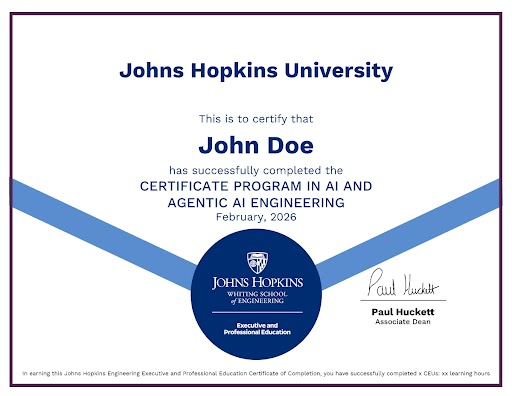
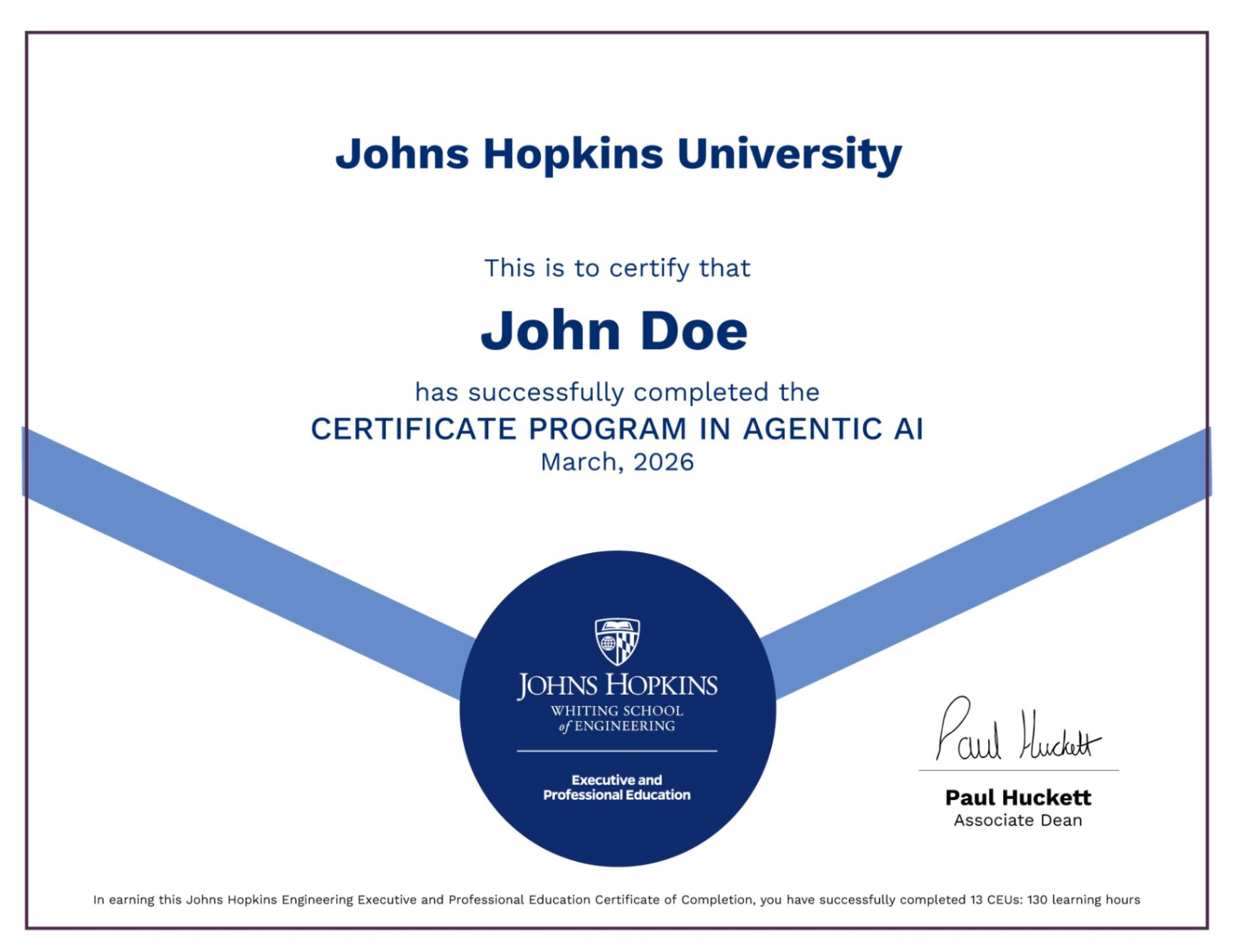
What motivated me to upskill in Agentic AI actually came from my work as an instructional designer. People often wonder why someone in my field is interested in agents, but for me the connection is clear. Faculty are constantly looking for ways to enhance learning experiences and design assessments that truly help students master course outcomes. Many instructors are also exploring how to responsibly integrate AI into education, especially in science and computer science domains where my background is most relevant. I wanted to understand how AI-driven approaches could genuinely enrich instruction and offer practical solutions. The turning point came during course design meetings where faculty discussed integrating generative AI tools without compromising academic integrity or the learning process. These conversations made me realize I needed to go beyond surface-level understanding. I wanted to understand not just the terminology, but the workflows, risks, and opportunities of AI in learning environments. At the same time, there is a broader tension in education between embracing and resisting AI. I felt strongly that education must evolve alongside these technologies to prepare the workforce of the future. The learning experience in this Agentic AI program has been excellent. The curriculum is well-structured, comprehensive, and progressively built, covering everything from LangChain and JSON handling to agent architecture and tool integration. Each week builds logically on the previous one, with a strong emphasis on applied learning through Python notebooks, quizzes, and assignments. Mentor sessions and masterclasses added significant value by helping troubleshoot concepts, clarify code, and deepen understanding. Faculty and mentors have been knowledgeable and supportive, and the inclusion of projects helped connect theory to real implementation. The most challenging part of the program was balancing it with work and personal responsibilities. I created a structured routine, using lunch breaks, early mornings, and weekends to complete lectures, quizzes, and notebooks. I dedicated focused time each week to stay on track, which required discipline but ultimately made the journey manageable. During this period, I also had personal responsibilities that required frequent travel, which made time management more demanding. Support from my family was essential in helping me stay committed. This experience strengthened my resilience and reinforced the importance of structure when managing multiple responsibilities. The program has significantly changed how I view Agentic AI. I now see agents as powerful support systems rather than replacements for human decision-making. They can streamline tasks, maintain consistency, and support instructional processes, but they still require human oversight, judgment, and context. In education, this hybrid approach is especially important to ensure both innovation and responsibility. I now see strong potential for integrating AI into higher education to support active learning and better prepare students for real-world applications. In my professional work, I have applied these learnings by developing an agent to support instructional designers in building Course Design Matrices. Rather than replacing the instructor, the agent guides the process by asking structured questions, helping define course and module learning objectives, and suggesting evidence-based learning activities. It supports alignment between objectives and instructional design while encouraging instructors to provide context-driven input. This ensures that learning design remains human-centered while being enhanced by AI-driven support. For professionals exploring Agentic AI, my advice is to engage deeply with hands-on practice and collaboration. Real understanding comes from building and experimenting, not just theory. It is also important to evaluate whether a problem truly requires an agent or whether simpler solutions like LLMs or RAG systems are sufficient. Intentionality matters. When building agents, collaboration and clear objectives are key to creating meaningful, efficient, and responsible solutions.

Read More